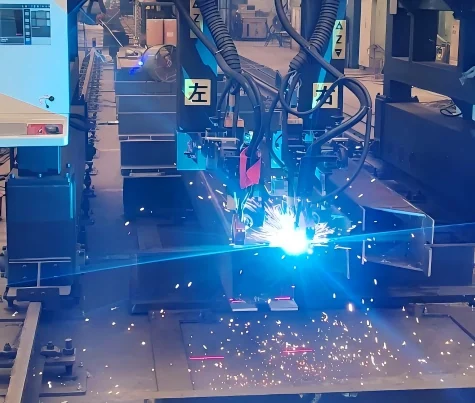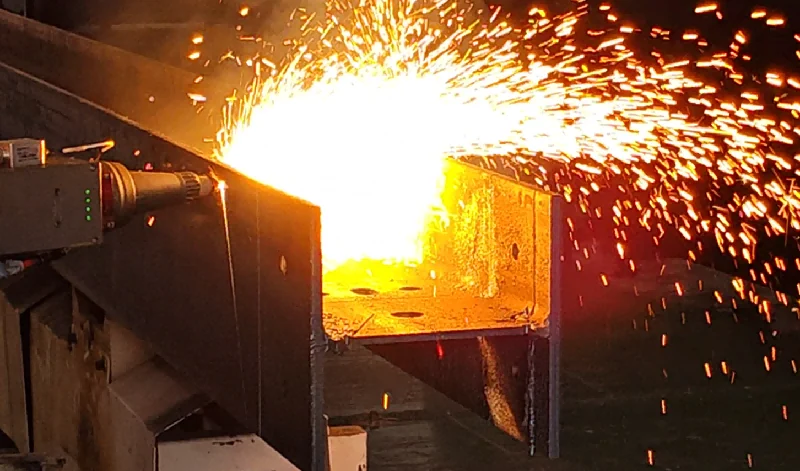
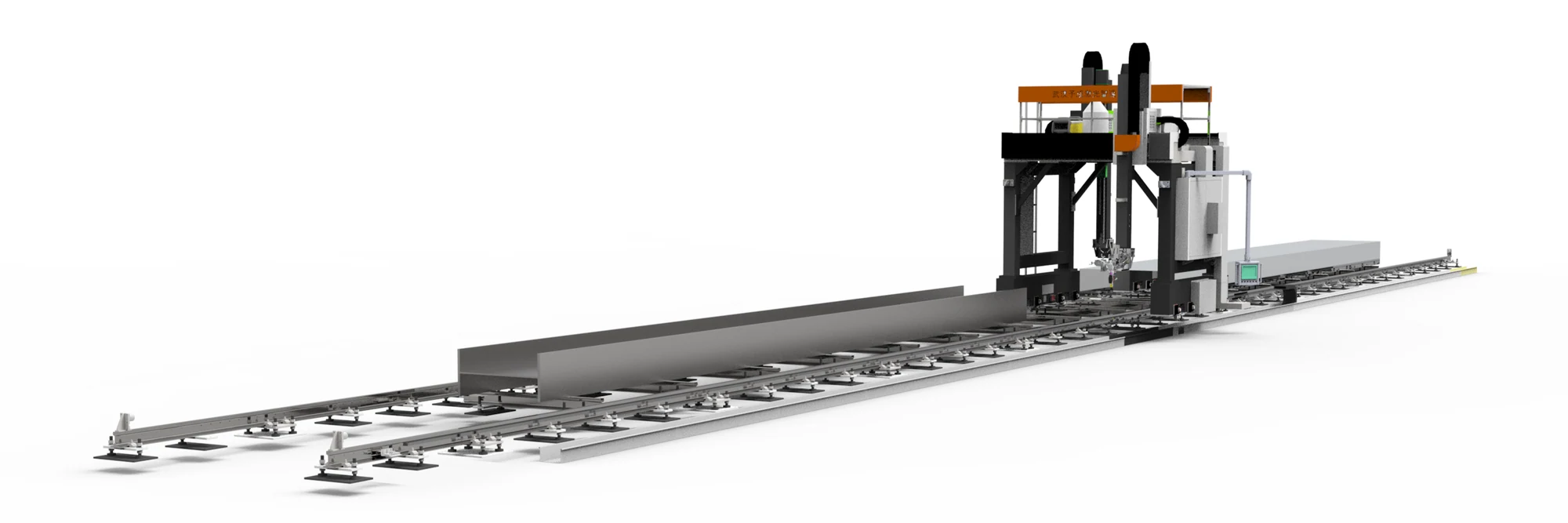
On March 14, the review meeting for the association group standard Technical Standard for Laser-Arc Hybrid Welding of Steel-Structure Components, jointly proposed and administered by the China Steel Structure Association, the China Construction Welding Association, and the Shanghai Steel Pipe Industry Association, was successfully held in Ezhou, Hubei Province. Authoritative experts from industry associations, research institutes, and leading enterprises gathered to conduct a strict review of the standard. After thorough discussion and prudent evaluation, the expert committee unanimously recognized that the standard reaches an internationally advanced level and fills a domestic gap; it holds significant meaning for standardizing technology application, improving engineering quality, and promoting industrial upgrading. The committee approved the standard for review, recommending that the drafting group refine it in line with comments to form the submission draft, which will be reported to the China Steel Structure Association for approval and joint release.
What happened
Introducing the background at the meeting, Zou Yujing, Chairman of Wuhan Yucon Laser, noted that China's steel-structure industry is large-scale and widely applied, but conventional welding processes commonly suffer from high production costs, low work efficiency, and insufficient weld quality stability. Addressing these common industry problems, Yucon Laser has deepened its engagement in steel-structure welding, continuously carried out technical breakthroughs and equipment iteration, systematically refined a complete laser-arc hybrid welding process and equipment system, and led the drafting of this standard, aiming to provide an authoritative basis and strong support for safe, standardized, efficient application of advanced welding technology.
The drafting process has been rigorous and efficient. Writing officially began in October 2025, and the initial review meeting was held in December 2025. In February 2026, the China Steel Structure Association publicly released the draft for nationwide comment, broadly absorbing industry suggestions. Drafting units carefully organized and fully absorbed more than 20 revision suggestions from upstream and downstream of the chain, refining the standard text over multiple rounds. By this final review, participating units had expanded to 25. The drafting process drew on industry-wide wisdom and has attracted broad attention, fully reflecting the industry's urgent demand and high expectation for standardized promotion of this technology.
Qiu Linbo, Director of the Science and Technology Affairs Department of the China Steel Structure Association, outlined the industry's overall current requirements for welding processes. He focused on the practical application of laser-arc hybrid welding in steel-structure engineering, stressing that welding procedure qualification procedures, technical indicators, and quality requirements must strictly align with and satisfy current national standards and specifications to ensure engineering safety and reliability.
Liu Jingfeng, Vice President and Secretary-General of the China Construction Welding Association, noted that China's annual steel-structure consumption already exceeds 100 million tons. Her association has long worked to integrate advanced, efficient welding processes into national and industry standard systems. She said the time is right to accelerate laser-arc hybrid welding in steel structures, and that a unified standard is urgently needed to guide standardized design, construction, acceptance, and the full process. She believed that, with joint efforts of experts and the drafting group, this review meeting will achieve the expected results, promote the early release of the standard, and provide solid guarantees for standardized, high-level industry development.
Technology and performance
Lu Zhikui, Deputy Secretary-General of the Shanghai Steel Pipe Industry Association, stated in his remarks that standards are an important carrier of technological innovation, and technological progress is the solid foundation for standard upgrading; the two complement and reinforce each other. Standard setting must keep pace with technological development and, more actively, lead the direction of technology innovation, drawing a roadmap and providing firm support for high-quality industrial development. He highly affirmed the promotion value of laser-arc hybrid welding in the steel-structure industry, and called for coordinated industry-wide efforts in standard interpretation and application, striving to upgrade this association group standard to a national standard within two years.
Liu Jiajun, Deputy Director of the Economic Development Center and Steel Department of China Metallurgical News Agency, combined the spirit of the national "two sessions" to share perspectives on high-quality development of the steel and steel-pipe industries. He stated that to implement the sessions' requirements on technological innovation and industrial upgrading, the steel-pipe industry must firmly follow a path of independent innovation and self-reliance. While China has built a clear scale advantage in conventional pipes, key areas such as high-end specialty pipes and extreme-environment service pipes still hold technical heights to conquer.
He argued that science and technology innovation must be treated as the primary driving force: continuously increase R&D investment, stay rooted in the production front line, focus on breaking through core technologies, strive to move from large volume to superior quality and strong technology, and push Chinese steel pipes toward the high end of the global industrial chain.
Industry significance
The review expert panel was authoritative, composed of experts from units including the China Construction Welding Association, the Technology Center of Dongfeng Motor Corporation, Wuchang Shipbuilding Industry, the Hubei Welding Association, Huazhong University of Science and Technology, and Wuhan China Construction Steel Structure Co., Ltd. The review was rigorous and realistic: the panel discussed and refined key contents item by item, including definitions of steel structures, welded components, and laser-arc hybrid welding technology, process requirements, quality control, and inspection and testing, and exchanged views on the standard's scientific soundness, foresight, and operability. Ultimately, the panel put forward six revision recommendations and unanimously approved the standard.
Participants agreed that the drafting, release, and implementation of the standard is an important achievement in the standardization of China's steel-structure welding field. It will standardize the design, construction, acceptance, and management of laser-arc hybrid welding in steel-structure engineering, significantly improve welding efficiency and engineering quality, reduce production energy consumption and comprehensive costs, and drive steel-structure welding toward high efficiency, green development, intelligence, and high quality.
The standard's implementation will further raise the overall technical level of China's steel-structure manufacturing, strengthen the autonomy and controllability of industrial and supply chains, provide firmer technical support for new industrialization, high-quality urban-rural infrastructure, and major engineering projects, and help China move from a steel-structure large country toward a steel-structure powerhouse.
Original source
Reporting: China Metallurgical News · First published 2026-03-16. The article above is an English translation of the cited report.
Frequently asked questions
What happened in March 2026?+
The laser-arc hybrid welding standard passed review and moved toward formal release.
Who led the drafting?+
Wuhan Yucon Laser Intelligent Manufacturing Co., Ltd.