Editor's note: T/CSCS 083—2026 Technical Standard for Laser-Arc Hybrid Welding of Steel-Structure Components is the first general association group standard in China's steel-structure laser-arc hybrid welding field. Its overall technical level reaches an internationally advanced level and has been formally implemented since August 1, 2026. The standard fills the gap in industry specifications, covering the full process of pre-weld preparation, process implementation, quality acceptance, and safety protection, and provides a unified basis for promoting this frontier welding technology in the steel-structure industry. Meanwhile, the promotion meeting for T/CSCS 083-2026, undertaken by Wuhan Yucon Laser, was held in Tianjin on September 4. Zou Yujing, Chairman of Yucon Laser and chief compiler of the standard, accepted an exclusive interview with this newspaper, offering an in-depth interpretation of standard drafting, technology implementation, industry pain points, and future development.
What happened
Reporter: Mr. Zou, T/CSCS 083-2026 is the first association group standard in the domestic steel-structure component laser-arc hybrid welding field. Could you introduce the original intention behind drafting the standard, and the main pain points the industry faced in applying this technology?
Zou Yujing: Laser-arc hybrid welding combines the two major advantages of laser's high energy density and arc's strong fill adaptability, and already has mature applications in shipbuilding and some high-end equipment fields. But in building steel structures, technology has outpaced regulations: a dedicated, unified industry standard has long been lacking. Many steel-structure manufacturers saw the potential of this technology for quality and efficiency improvement, but encountered many practical obstacles when actually implementing it.
First, there was no basis to follow. Equipment selection, process parameter selection, weld quality judgment, and inspection and acceptance had no unified procedures. Design institutes, general contractors, and manufacturers did not share a consistent understanding of hybrid welded joint reliability; even when a company produced qualified specimens, project applications still faced difficulties in review and acceptance, and "the technology works, yet it cannot be used at scale" became a common situation. Second, process implementation varied widely: equipment hardware differed greatly between companies, and process debugging relied on individual engineer experience; with the same equipment, weld stability differed noticeably across teams, and no complete process guidance was available. In addition, pre-weld treatment, working-condition adaptation, and operational safety protection lacked targeted requirements; many enterprises directly applied conventional arc welding codes, which do not fully fit the operating characteristics of laser-arc hybrid welding.
Seeing these real industry dilemmas, we jointly launched the standard drafting with dozens of participating units—domestic steel-structure design institutes, construction units, equipment enterprises, inspection bodies, universities, and research institutes. We carried out extensive experimental verification and converted engineering practice into implementable clauses, so that the new technology has "standards to follow and processes to adhere to," clearing the key blockage for moving the technology from the laboratory to batch engineering application.
Reporter: The standard covers the full chain of pre-weld preparation, process implementation, quality acceptance, and safety protection. Which clauses are the core innovations, and what guidance do they provide for steel-structure manufacturers?
Zou: The biggest innovation of this standard is that, for the first time targeting steel-structure component scenarios, it systematically and completely establishes a full-process laser-arc hybrid welding technical system, rather than simply copying standards from other industries or conventional welding standards.
In pre-weld preparation, the standard defines selection of base metal and filler material, and gives allowable ranges for fit-up conditions such as assembly gaps and misalignment tailored to steel-structure production conditions, fully accounting for actual assembly errors in steel-structure fabrication plants rather than copying ideal laboratory conditions. In process implementation, it provides reference ranges for process parameters according to different plate thicknesses and component types, and clarifies welding procedure qualification requirements, solving the problem of enterprises not knowing how to select parameters or conduct qualification. In quality acceptance, it aligns with existing steel-structure engineering quality systems, defining requirements for appearance quality, non-destructive testing, and mechanical performance judgment, resolving the pain point of inconsistent on-site acceptance criteria. In safety protection, it specifically addresses laser operation risks, defining laser protection, fume handling, and equipment operation safety requirements, filling safety gaps not covered by conventional welding standards.
For manufacturers, this standard amounts to a practical handbook. After introducing laser-arc hybrid welding lines, enterprises can conduct procedure qualification, personnel training, production control, and finished-product inspection against the standard, reducing process trial-and-error costs. At the same time, the standard provides a unified evaluation ruler for design institutes, supervisors, and inspection bodies, eliminating divergent understandings and clearing institutional barriers for the new technology to enter engineering projects.
Reporter: What promotion outcomes do you hope this standard rollout will achieve?
Technology and performance
Zou: Releasing the standard is only the first step; landing and application is the purpose. We plan to work with associations and participating units to continue a series of interpretation and training sessions—not just clause reading, but combined with hands-on cases, linking standard clauses to real factory production scenarios. On one hand, technical leaders, process engineers, and quality inspectors at steel-structure enterprises should understand the standard, know under what conditions hybrid welding can be used, how to conduct qualification, and how to control quality risks. On the other hand, outreach should be made to design institutes, supervisors, and inspection units to change the industry's wait-and-see attitude toward the new technology. Through promotion, we hope to foster an industry atmosphere of "understanding the standard, applying it skillfully, and inspecting rigorously," avoiding the situation where "the standard hangs on the wall while production follows the old ways." Going forward, we will continue collecting front-line factory feedback to build engineering data for standard iteration.
Reporter: In practical projects such as the China Construction Steel Structure Tianjin plant, what typical application cases and actual production results have been achieved?
Zou: The China Construction Steel Structure Tianjin plant is one of the earliest domestic plants to pilot industrialized laser-arc hybrid welding of steel-structure components. Process validation and batch trial production were carried out for mainstream components such as H-beams and box columns. Through laser-arc hybrid welding, component welding speed rose significantly, welding deformation was effectively controlled, post-weld straightening hours were clearly reduced, and weld mechanical properties all met engineering code requirements.
Based on actual production-line data, under the same component conditions, the welding production cycle was significantly shortened, filler consumption dropped, and workshop welding fume improved, providing a replicable sample for intelligent upgrading of large steel-structure plants. The greatest value of such demonstration projects is to prove process reliability with real engineering components, dispel industry concerns, and provide reference for peer enterprises.
Reporter: What layout has Wuhan Yucon Laser made in laser welding equipment and process R&D? What will be the next key research directions for the steel-structure industry?
Industry significance
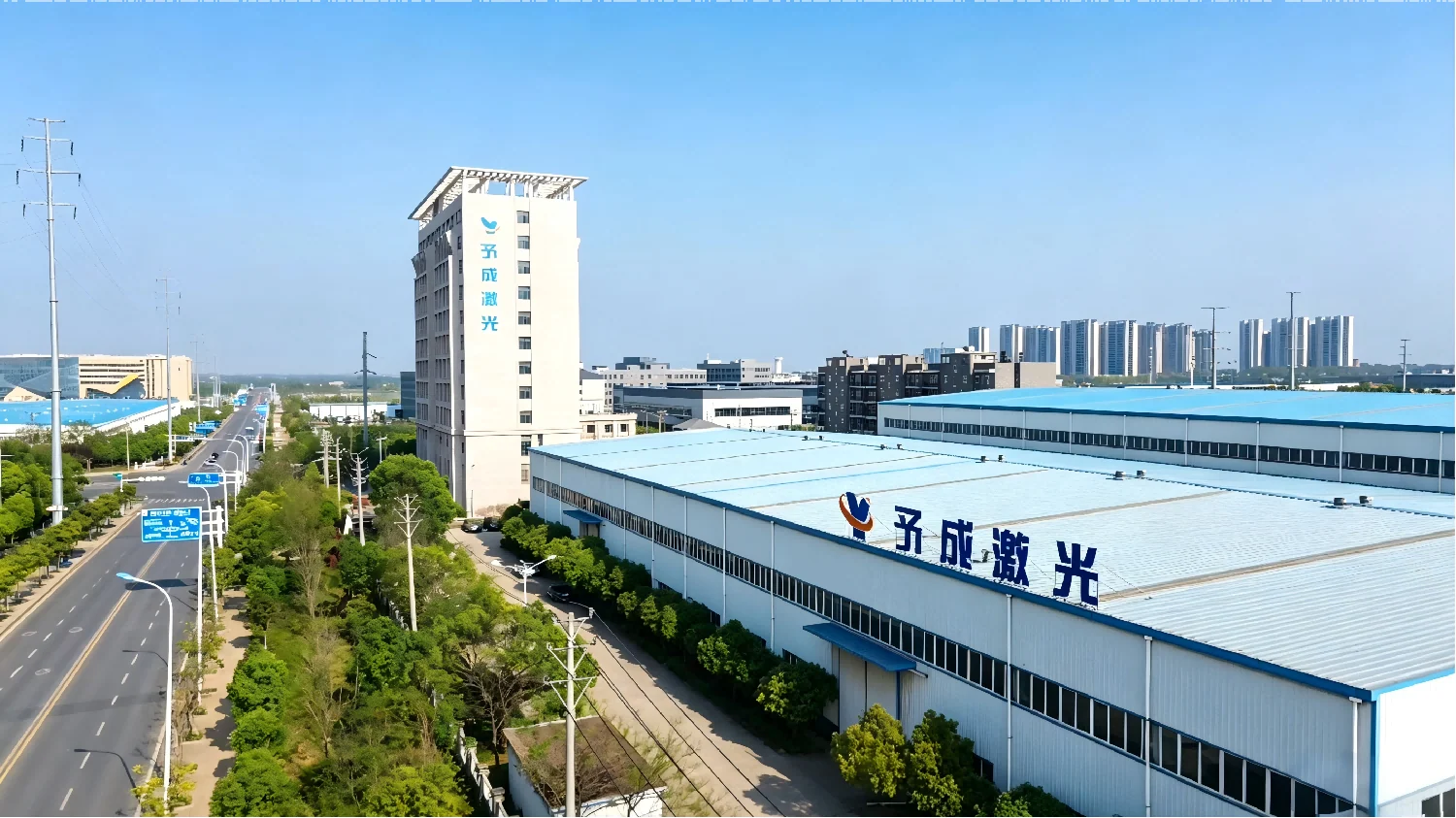
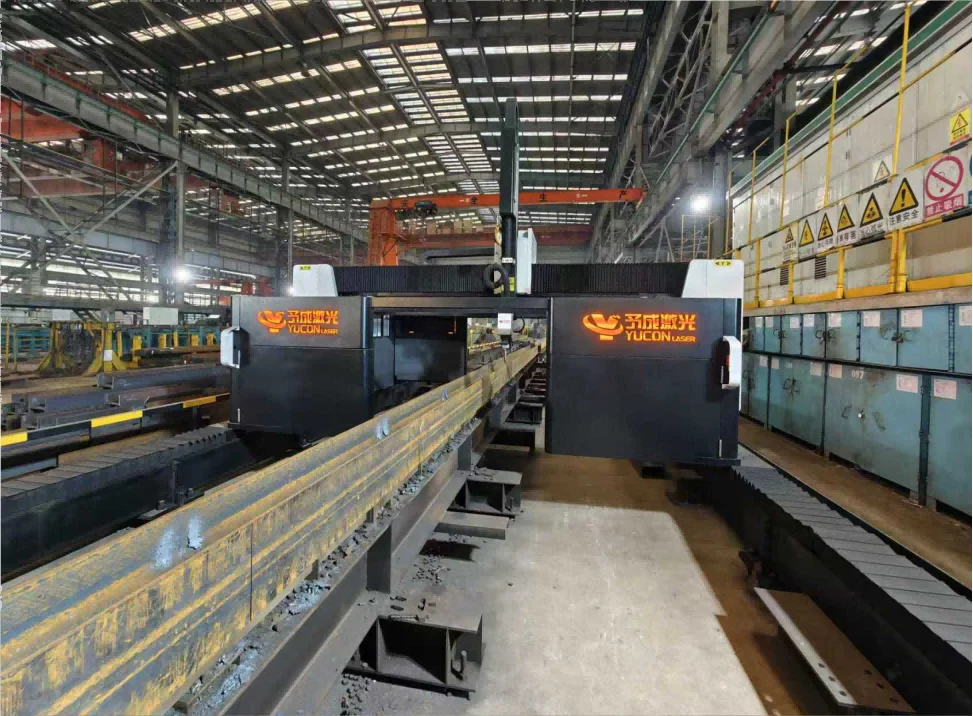
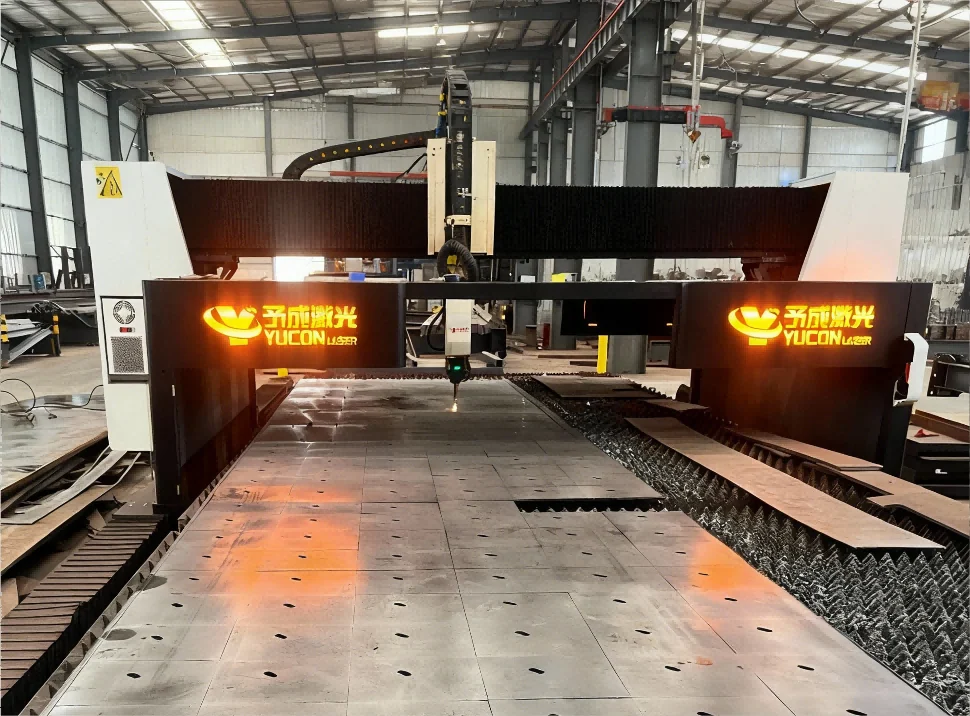
Zou: Drawing on the Optics Valley laser industry base, Yucon Laser has long been rooted in the steel-structure intelligent manufacturing track. On one hand, we focus on independent R&D of hardware equipment: we have launched H-beam and box-column laser-arc hybrid welding intelligent production lines, and also developed section-steel 3D five-axis laser cutting equipment, achieving integrated development of steel-structure component cutting and welding equipment, with dozens of related patents and provincial-level key R&D projects. On the other hand, we do not merely sell equipment; we adhere to a dual drive of equipment plus process, have built a process testing base, and continuously accumulate a process database for different base metals, plate thicknesses, and components in steel structures, providing customers with supporting process solutions rather than simply delivering hardware.
For the steel-structure industry, our next three key research directions are: first, continue optimizing equipment, improving tolerance to assembly gap fluctuation, lowering requirements for upstream tooling precision, and further reducing enterprises' process debugging difficulty; second, advance R&D of online perception of the welding process and online quality monitoring, moving toward weld-process visualization and defect early warning, and raising production-line intelligence; third, accumulate more engineering process data, improve the process knowledge base, conduct special process research for components in special working conditions such as bridges and offshore engineering, and expand the technology's application boundary. We will also continue supporting the industry with standard promotion and technical training services.
Laser-arc hybrid welding is an important new-technology carrier in the steel-structure welding field. First, it promotes automation and intelligent upgrading of welding, reduces manual intervention, and improves product consistency, fitting the direction of steel-structure intelligent manufacturing. Second, the process itself is a green welding process: lower welding heat input, reduced filler consumption, and fewer welding fume emissions support green, low-carbon transformation of manufacturing. Third, the new technology pushes enterprise production-mode upgrading, moving steel structures from traditional workshop-style production toward standardized, factory prefabrication, raising the industry's overall manufacturing level. Of course, we should also view it objectively.
Reporter: What advice do you have for steel-structure manufacturers considering laser-arc hybrid welding? What expectations do you hold for future standard upgrading and industry coordinated development?
Zou: A few practical suggestions for enterprises preparing to deploy this technology. First, do not blindly follow trends in buying equipment; first review your product mix, assess component plate thickness, batch size, and working conditions, judge process fit, and complete input-output calculations. Second, value process and talent development: equipment is only hardware, and process development and personnel training must keep pace, avoiding the situation of "affordable equipment but unable to run the process." Third, prioritize small-batch pilots, complete thorough procedure qualification, accumulate production data before gradually expanding application scope, and hold the bottom line of engineering quality and safety. Fourth, proactively make use of this association group standard as the basis for process development and quality control.
Looking ahead to the industry, I expect all parties along the chain to coordinate further: equipment enterprises, steel-structure manufacturers, design institutes, inspection bodies, and universities should strengthen industry-university-research-application collaboration, feed problems found in engineering practice back into the standard system, and promote continuous standard upgrading based on industrial application. I also hope the industry will form an inclusive, pragmatic innovation atmosphere, viewing new technology rationally—neither blindly deifying it nor rejecting it over risk concerns—continuously accumulating experience through engineering practice, and jointly advancing China's steel-structure welding technology to a higher level.
Original source
Reporting: China Metallurgical News / China Steel News Network · First published 2026-09-07. The article above is an English translation of the cited report.
Frequently asked questions
What should fabricators check before buying equipment?+
Product mix, plate thickness, batch size, working conditions and a full input-output calculation.
What matters beyond the machine?+
Process development and operator training; the standard provides a shared framework for both.