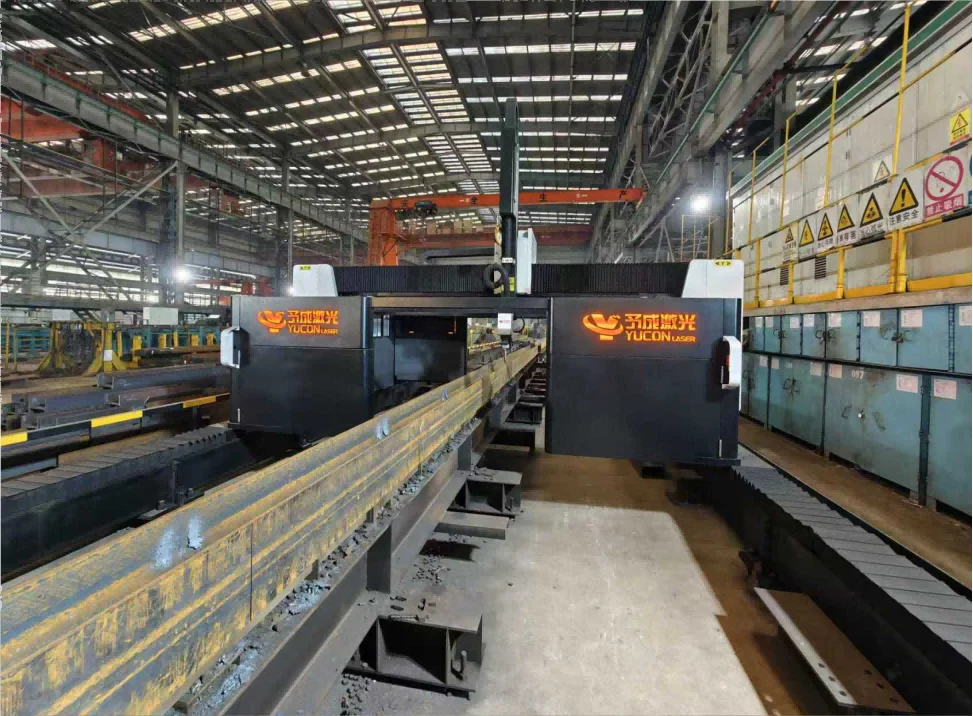
From 2022 to 2024, steel-structure output exceeded 100 million tons for three consecutive years. Against this backdrop, the industry still faces challenges: overcapacity has disrupted supply and demand and led to frequent price wars; automation and intelligence levels remain relatively low, with a notable gap versus developed countries; and domestic technology has not yet fully reached an internationally leading level in welding, precision machining, and new-material application. The key driving force for industry development is technological innovation.
What happened
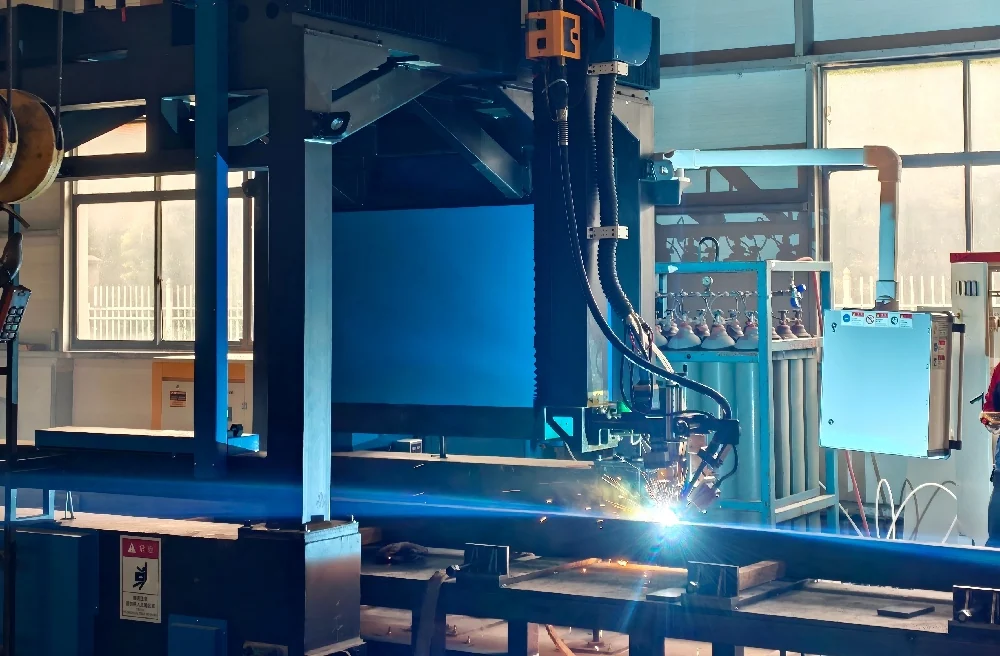
"In the first week of 2026, our self-developed H-beam and box-column laser-arc hybrid welding production lines already received orders for nearly ten sets; we are almost stretched beyond our capacity," Zou Yujing, Chairman of Wuhan Yucon Laser Intelligent Manufacturing Co., Ltd., told China Metallurgical News in a recent interview. He explained that the H-beam and box-column laser-arc hybrid welding production lines raise efficiency 3 to 4 times while meeting current steel-structure industry specifications. With intelligence illuminating the sky, the scaled application of laser-arc hybrid welding lines empowers steel-structure enterprises and leads industrial upgrading.
Making Steel-Structure Processing Smarter and Greener
In the coming years, with the advancement of Industry 4.0 and intelligent manufacturing, the steel-structure industry needs to increase R&D investment and promote digital and intelligent transformation.
As the dual-carbon goals advance and manufacturing transforms, conventional welding processes (such as submerged-arc welding) expose problems in key structures like H-beams and stainless clad pipes: low efficiency, large thermal deformation, complex upstream processes, high energy consumption, and heavy reliance on skilled welders. Manufacturing sectors represented by building steel structures, bridge steel structures, ship steel structures, offshore platforms, and nuclear power containment shells have an urgent need to upgrade component welding quality and efficiency.
Meanwhile, emerging domestic fields such as green buildings and prefabricated buildings require steel-structure enterprises to actively adjust product mix to meet market demand, which in turn drives demand for high-efficiency, green, and intelligent equipment.
"For example, green buildings impose increasingly strict environmental performance requirements; steel-structure enterprises need to develop more environmentally friendly materials and production processes to meet green building standards, while prefabricated buildings require efficient, intelligent production capability," Zou Yujing said.
These demands call for a new generation of intelligent, green, and high-efficiency equipment to emerge in due course. Yucon Laser launched its laser-arc hybrid welding equipment project in 2023 precisely to address the gap in green, intelligent equipment: on one hand, to respond to Made in China 2025's call for autonomous, controllable high-end equipment; on the other, to meet welding demand for "lighter, stronger, more corrosion-resistant" composite materials in steel structures, ships, and nuclear power, advancing China from a manufacturing large country toward a manufacturing powerhouse.
The steel-structure industry traditionally relies on welders operating conventional welding equipment, with low efficiency, unstable quality, and high material and labor costs. Laser-arc hybrid welding equipment features high efficiency, green performance, and low cost, filling the industry's gaps. Yet the R&D journey was far from smooth and fraught with difficulties.
"In R&D, we overcame three major technical challenges in succession," Zou Yujing said.
First, the stability challenge. Yucon Laser pioneered a fully water-cooled reflective laser head worldwide: lens life exceeds 5,000 hours (compared with under 1,500 hours in conventional equipment), and focal drift is controlled within ±0.05 mm. "That amplitude is about half the thickness of a hair, fully meeting welding requirements," Zou Yujing illustrated.
Second, the adaptive control challenge. Through visual sensing plus AI algorithms to regulate parameters in real time, Yucon Laser effectively handles gap fluctuations of 0.1–1.5 mm, raising the weld qualification rate from 80% under non-Yucon processes to over 98% under Yucon technology.
Third, process innovation to solve industry pain points. Yucon Laser achieves low-heat-input (5–8 kJ/cm) one-shot forming, resulting in extremely low component thermal deformation that eliminates post-weld straightening.
These achievements are inseparable from Yucon Laser's long-term, increased investment in innovation. R&D investment has grown 200% over the past three years, and special R&D spending in 2024 alone doubled versus the previous year. On talent, the core team comes from Huazhong University of Science and Technology, operating a dual-track system of "chief expert plus technical director" and co-building an enterprise technology center with universities to tackle hard problems. On incentives, teams that break through key technologies are awarded project profit bonuses. Yucon Laser has now filed 54 patents (including 22 invention patents).
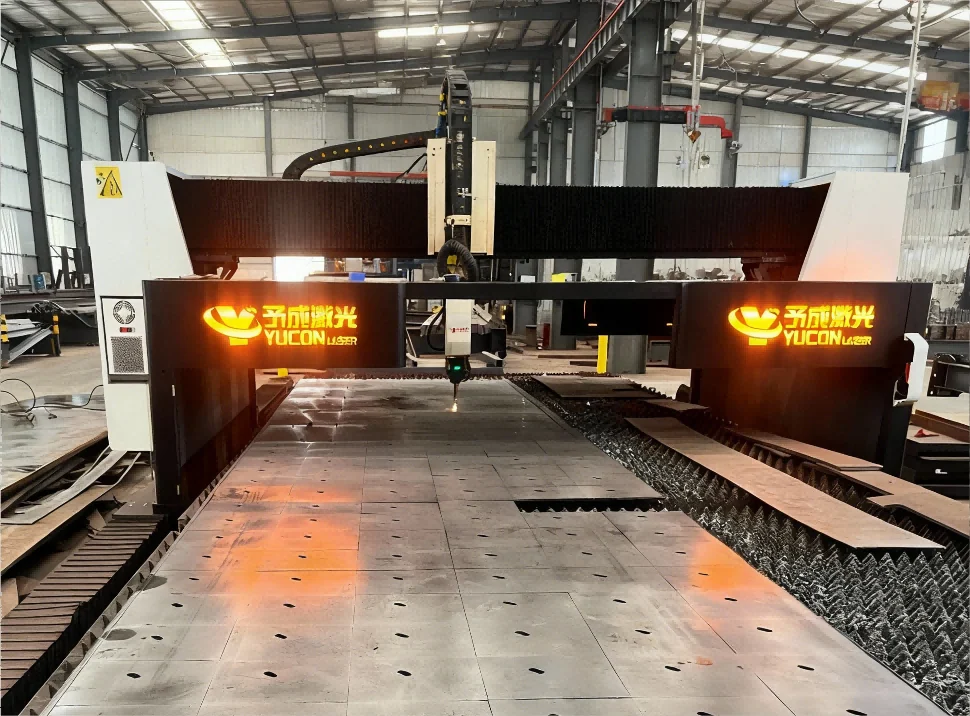
"We proceeded with full confidence: on the technology side, we and Professor Gao Ming's team at HUST were the first globally to propose the concept of 'scanning hybrid welding', and academic results support original technology; on the engineering side, our self-developed H-beam 3D five-axis laser cutting machines have been delivered in 450 sets, ranking first in national market share, and we deeply understand steel-structure process requirements," Zou Yujing said.
What advantages do the H-beam and box-column laser-arc hybrid welding production lines bring that drive major industry change? "The current lines use the latest 20 kW laser plus arc hybrid welding technology, which improves welding efficiency, increases weld penetration, enhances gas bubble escape, eliminates porosity at weld joints, and strengthens welding adaptability," Zou Yujing introduced.
Compared with conventional submerged-arc and gas-shielded welding, laser-arc hybrid welding requires no groove for thicknesses below 16 mm; for thicknesses above 16 mm, only a small Y-shaped groove is needed. Wire consumption cost drops by 73%, and welding speed rises 2 to 3 times. Taking a box-column weld with dimensions 400 mm × 400 mm × 12,000 mm, 14 mm thickness, 845 kg weight, and 48 m weld length as an example, submerged-arc/gas-shielded welding costs about RMB 53,200 per 100 tons of output, whereas laser-arc hybrid welding costs only about RMB 15,600 per 100 tons—just 29.3% of the conventional cost.
"Yucon's hybrid welding equipment breaks through the limitations of conventional submerged-arc welding, which can only handle straight welds in medium and thick plates and mainly targets standardized bridge components and factory steel structures. It can stably weld carbon steel up to 16 mm thick; at 16 mm and below, single-side welding achieves double-side forming without back-gouging, allowing us to enter markets previously hard to reach, such as high-end bridges and wind turbine towers, and directly expanding the product adaptation range by over 30%," a steel-structure enterprise from Inner Mongolia noted.
Technology and performance
"Currently, these products have been successfully applied at leading steel-structure enterprises such as MCC 22 Group and China Construction Steel Structure, earning broad market recognition," Zou Yujing said.
Shaping the Future with the "Deliver Perfection" Philosophy
In Zou Yujing's view, Yucon Laser's mission goes beyond selling equipment; it also means driving industry progress through technological innovation.
"We were the first to introduce laser-arc hybrid welding into steel-structure manufacturing, helping decarbonize the construction sector; we broke through key core problems in the localization of nuclear power piping, contributing to national energy security. Going forward, we will continue to uphold the philosophy of 'delivering perfection to others and shaping the future', and take Chinese laser welding technology to the top of the global industrial chain," Zou Yujing said.
"Delivering perfection" begins with the equipment itself. Through technical accumulation and deep industry-university-research integration, Yucon Laser has formed core strengths and a foundation for further R&D, offering multiple advantages unmatched by conventional processes.
First, the H-beam/box-column laser-arc hybrid welding production line raises efficiency by more than 5 times versus conventional welding: single-pass one-shot forming replaces traditional multi-layer, multi-pass welding, reducing groove preparation and filler material procedures.
Second, quality reaches an internationally leading level: joint strength improves by 25%, deformation drops by 60%, and weld corrosion resistance (PRE value) deviates from the base material by less than 5%.
Third, welding cost is substantially reduced. Taking account of on-site labor, filler consumption, and efficiency gains, using the H-beam/box-column hybrid welding line lowers cost by 70% versus conventional welding.
"Delivering perfection" also shows in quality control. "On quality control, Yucon Laser applies nuclear-grade standards across the whole process," Zou Yujing said. In the design phase, FMEA (failure mode analysis) simulates extreme working conditions and optimizes structural redundancy; in production, multi-layer inspection is set for key optical components, and assembly environments are kept at constant temperature and humidity (±1 °C); in factory testing, every piece of equipment must pass a 48-hour uninterrupted welding stress test, with welds meeting ISO 15614.
Industry significance
"For example, the cooling-water pipe project at the Qinshan Nuclear Power Plant required 20 years of zero weld leakage. Through spectral analysis, we found sulfur fluctuation in the molten pool caused micro-cracks; we then upgraded the AI algorithm and added molten-pool oscillation frequency monitoring, ultimately achieving a 100% X-ray inspection pass rate," Zou Yujing said.
"Delivering perfection" further appears in value-added service and value-chain extension: evolving from an equipment supplier into a partner. First, joint R&D with customers—for instance, setting up joint laboratories with HUST and CGN to customize welding process databases for nuclear-grade materials. Second, value-added services: Yucon Laser offers an "equipment + consumables + remote O&M" package, using a cloud platform to predict component life and reduce customer downtime losses. Third, rapid response with on-site service: Yucon Laser has established three service centers in the Beijing-Tianjin-Hebei region, the Yangtze River Delta, and the Greater Bay Area, reaching the site within 24 hours.
"Two years ago, when we delivered an H-beam 3D five-axis laser cutting machine to China Construction Steel Structure, we found its welding process passed through six machines. By integrating cutting, grooving, and welding functions, we designed a one-line production layout that cut material handling distance by 70% and lifted overall capacity by 40%," Zou Yujing illustrated.
On market prospects, Zou Yujing believes the domestic high-end steel-structure welding equipment market will exceed RMB 30 billion in 2026, with a future compound annual growth rate of 25%; over the next five years, the potential to replace conventional welding equipment (a stock of 130,000 units) reaches 80%.
Innovation has no end. Where will technology iterate next? "In 2026 we will develop welding processes for titanium-steel and aluminum-steel composite materials, entering aerospace; in 2027 we will achieve digital twins of welding parameters, using AR glasses to guide operators in real time; by 2030 we will explore superconducting laser technology, cutting energy consumption by another 30%," Zou Yujing laid out Yucon's future technology roadmap.
Welding of new materials such as titanium-steel and aluminum-steel cladding, aerospace application potential, next-generation smart factories with digital twins and AR guidance—a grand innovation canvas drawn with light as the brush and electricity as the ink is gradually unfolding for steel-structure practitioners.
"The new-material track is on a trillion-yuan scale. Within three years, we will build a digital workshop and raise annual capacity by 300%, to meet the intelligent welding production-line demand of the new-material track as much as possible," Zou Yujing emphasized.
"Our next step is to add several more laser cutting and hybrid welding machines; our cooperation with Yucon Laser holds very broad prospects," a leader of Dongfangcheng Construction Group said.
Yucon Laser is forging the foundation of Chinese steel-structure intelligent manufacturing with the fire of converging light and arc.
Original source
Reporting: China Metallurgical News · First published 2026-01-14. The article above is an English translation of the cited report.
Frequently asked questions
What drove recent orders?+
Demand for H-beam and box-column laser-arc hybrid welding lines that reduce multi-pass welding and shorten production flow.
Which Yucon product fits box columns?+
The H-beam & box-column laser-arc hybrid welding production line.