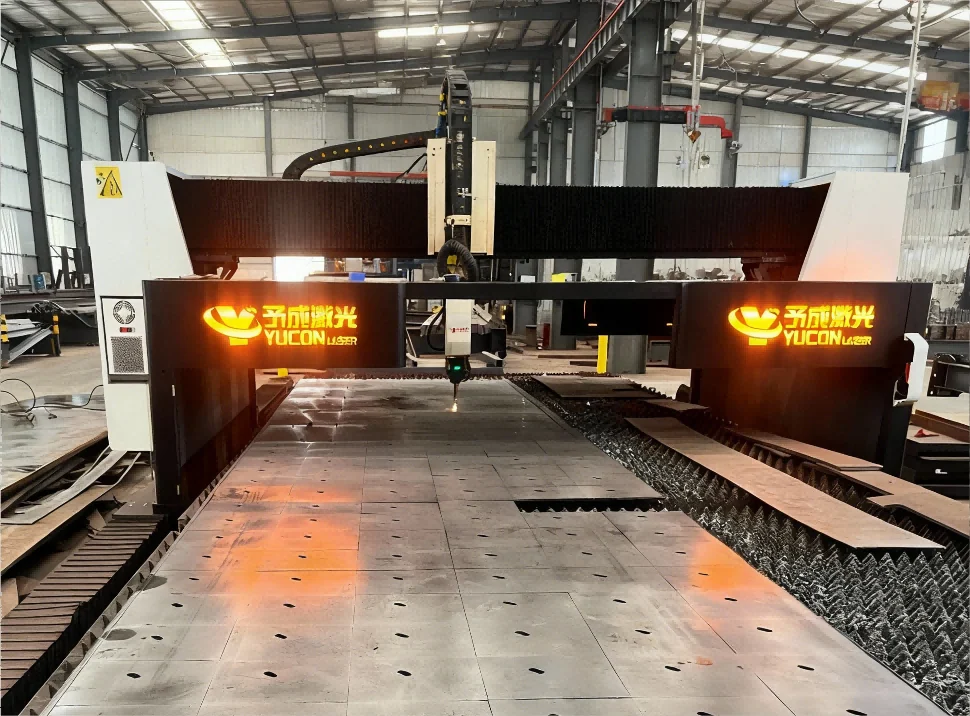
"Our principle is to bring laser welding and arc welding together, each exerting its own advantages to produce an efficient welding result," Zou Yujing, Chairman of Yucon Laser, said at the September 4 promotion meeting for the Technical Standard for Laser-Arc Hybrid Welding of Steel-Structure Components (T/CSCS 083-2026 | T/CECWA 3002-2026 | T/SSTA 010-2026) in Tianjin. In the golden autumn, on the coastal land of Tianjin, association representatives, experts and scholars, enterprise executives, and technical backbones from across the country's steel-structure industry gathered around the theme "Standard-Guided High-Quality Development, Laser-Empowered Steel-Structure Innovation," interpreting the standard's core content, exchanging technical application practice, and jointly discussing industrial implementation paths.
What happened
Industry Pain Points Call for New Standards Supply
"China's steel-pipe industry is currently at a critical stage of transformation, upgrading, and quality-and-efficiency improvement, with both pressure and opportunity," Zheng Guiying, Chairman of the Steel Pipe Branch of the China Steel Structure Association, stated in his address, capturing the industry's development stage. In 2026, the steel industry as a whole is in an adjustment cycle of shrinking demand, high costs, and profit pressure; the steel-pipe industry similarly faces structural contradictions: fierce homogeneous competition and narrowing profit margins; insufficient supply of high-end corrosion-resistant, high-strength specialty pipes; rising carbon compliance costs and green trade barriers; and a gap between traditional manufacturing modes and the high-standard, green, intelligent demands of new urban construction. How to break through has become a shared question for all practitioners.
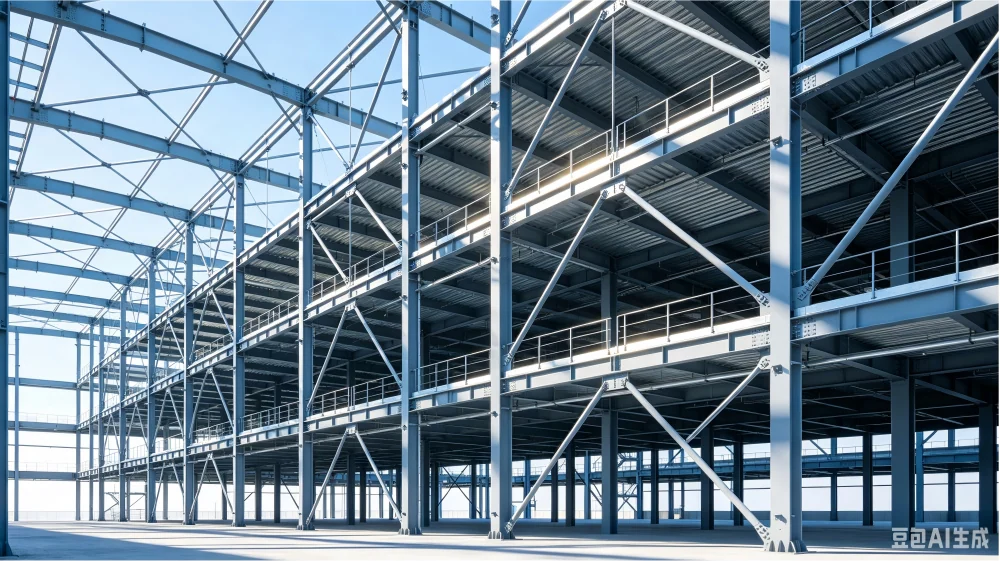
It is not only the pipe sector: the entire construction industry stands at a key turning point toward intelligent and green construction. Lin Jianquan, Secretary-General of the Smart Construction and New Building Industrialization Committee of the China Steel Structure Association, pointed out that steel structures, as a typical representative of new building industrialization, have an intelligence level that directly determines the quality of high-quality construction development, and welding, as the core steel-structure fabrication process, is the key variable for industry transformation and upgrading.
For a long time, conventional arc welding (submerged-arc welding, shielded metal arc welding) in thick-plate steel-structure fabrication has suffered from large heat input, heavy component deformation, long production cycles, and heavy welding fume; groove preparation is labor-intensive, filler consumption is high, post-weld grinding and repair are frequent, and skilled welders are highly relied upon—hard to meet current multi-dimensional requirements for welding quality, production efficiency, and green manufacturing. Xie Qi, Deputy Secretary-General of the China Construction Welding Association, acknowledged that existing national and industry standards do not yet cover laser-arc hybrid welding technology; enterprises have long faced the dilemma of "no standard to follow, no parameters to refer to, no criteria to judge by": each party followed its own experience, setting its own rules for groove form, process parameters, and quality inspection, making horizontal benchmarking and traceability difficult. As an attending expert put it: "An advanced technology without a standard may run fast, but it cannot run far." This association group standard was introduced precisely to set a unified ruler for laser hybrid welding to move from "able to weld" to "welding well, stably, and economically."
The demand for industrial upgrading drives the pace of standards supply. Against this backdrop, the first association group standard for laser-arc hybrid welding in the steel-structure field, led by Wuhan Yucon Laser and drafted by 26 participating units, emerged, offering the industry an "operating manual" for technological upgrading. It addresses the three most urgent industry needs: a unified process for enterprises on "how to do it," a clear evaluation ruler for inspection on "how to judge," and a reliable path for promotion on "how to replicate"—turning an advanced process from the "exclusive know-how" of a few leading enterprises into a common language available industry-wide at any time.
A New Industry Ruler That Fills the Gap
"This standard is an important achievement of independent innovation in China's steel-structure welding technology, marking our transition from following to parallel competition in this field," Lin Jianquan's evaluation conveys the standard's industry weight. Numbered T/CSCS 083-2026, T/CECWA 3002-2026, and T/SSTA 010-2026, the standard was jointly released on May 1, 2026 by the China Steel Structure Association, the China Construction Welding Association, and the Shanghai Steel Pipe Industry Association, and formally implemented on August 1. Drafted over eight months and drawing on the industry wisdom of 26 participating units, it fills the domestic general-standard gap in laser-arc hybrid welding for building, bridge, offshore engineering, and shipbuilding steel structures, with overall technology reaching an internationally advanced level. "The day the standard lands is the day industrial scaling begins." This Chinese-led ruler gives scaled hybrid-welding application in building steel structures, bridges, offshore steel structures, and equipment steel structures a common benchmark for the first time.
Jiang Laihe, standard lead drafting unit's Head of the Welding Process Department at Yucon Laser, gave a systematic interpretation of the standard content. He explained that the core of laser-arc hybrid welding is the organic fusion of laser welding's high energy density with arc welding's strong adaptability and low cost; two heat sources act on the same molten pool to achieve a 1+1>2 effect, combining deep penetration, high efficiency, small deformation, and low energy consumption.
Technology and performance
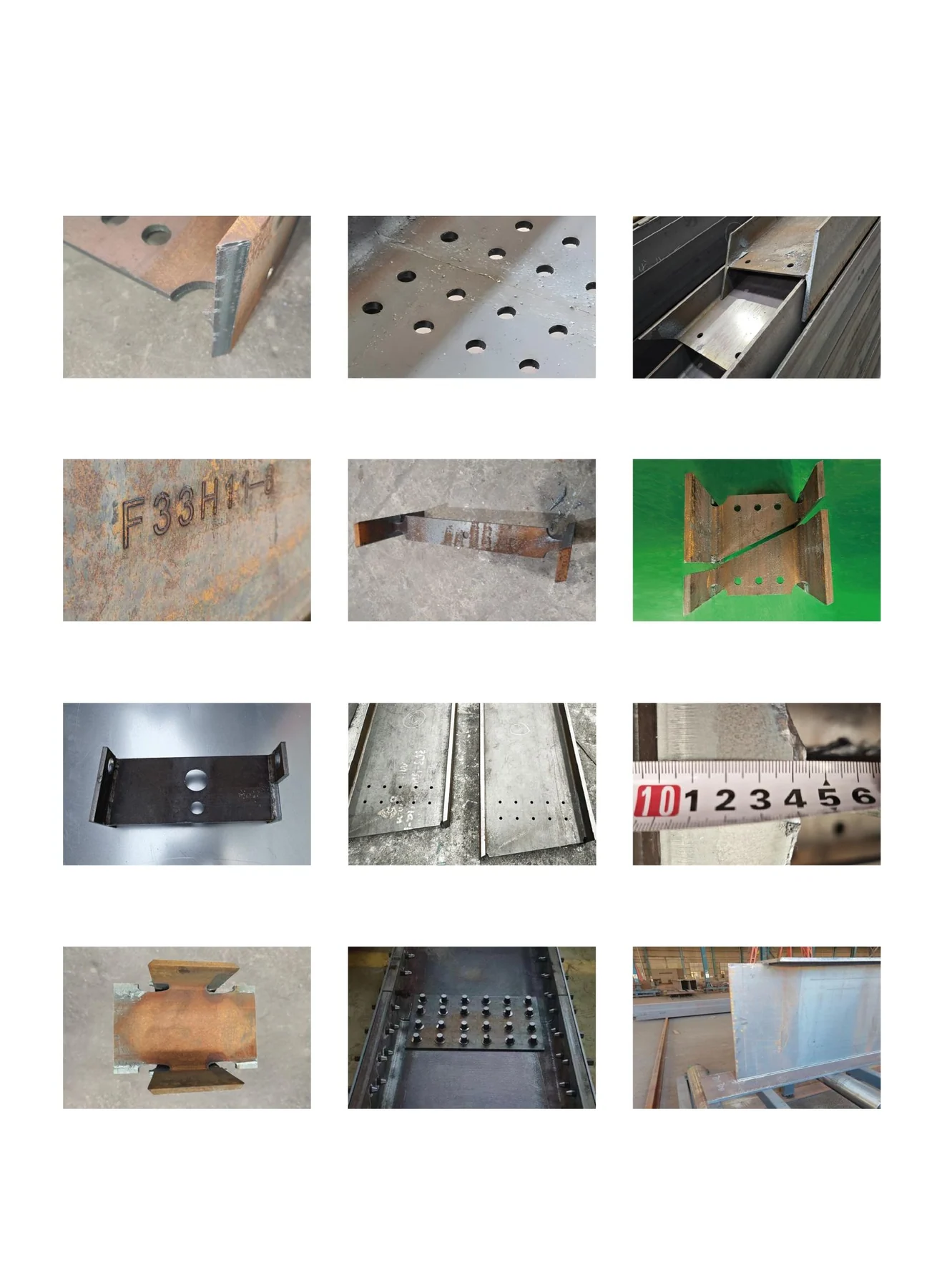
The released standard covers full-process technical requirements, from terminology, equipment composition, and material selection to groove design, process parameters, operating specifications, and quality inspection, providing clear, executable technical guidance. For steel-structure components of different forms and thicknesses—H-beams, box columns (beams), node plates—the standard defines differentiated groove schemes: plates 16 mm and below need no groove, achieving single-side welding double-side forming; thicknesses above 16 mm require only a small-angle groove; double-side welding covers components over 30 mm, greatly reducing groove machining and wire fill. Taking common structural steel such as Q355B as an example, the applicable thickness range is 10–60 mm, and the main welding position uses single-pass one-shot forming to replace conventional multi-layer, multi-pass welding. The standard also quantifies core process parameters: groove machining accuracy is controlled within ±0.5 mm, key dimensional tolerance reaches ±0.1 mm, and recommended ranges are given for laser power, welding speed, wire feed angle, and shielding gas flow, effectively lowering the technology's application threshold.
The value of technology must ultimately be tested in practice. Li Pengpeng, Chief Welding Expert at China Construction Steel Structure Tianjin Co., Ltd., shared front-line application data: taking 20–25 mm thick box columns and steel beams as an example, after half a year of domestic technology breakthrough work, the team applied the technology to welding 10–25 mm thick Q355B steel plates, raising welding efficiency 3–5 times, reducing electricity consumption by 50%, cutting process costs by 60%, and lifting the first-pass weld qualification rate from 40% under conventional processes to over 92%; daily box-beam output jumped from 3–4 pieces to 20–30, component deformation dropped by 70%, and post-weld straightening and grinding workload fell sharply. Yucon Laser's calculations similarly confirm the technology's economics: laser-arc hybrid welding wire consumption is only one-quarter to one-fifth that of conventional processes, and comprehensive processing cost is about one-third of conventional welding, with striking results in saving labor, material, electricity, and processes.
Moving the Standard from Paper to the Production Front Line
"The vitality of a standard lies in implementation rather than release, in usability rather than grandeur," Wei Liqun, Secretary-General of the Shanghai Steel Pipe Industry Association, and this sentence became the consensus of the entire promotion meeting. "A standard written into the workshop is a true standard; parameters turned into actions are real benefits." How to move the standard from paper into the workshop and embed it in production lines was the core topic discussed by all participants.
Wei Liqun proposed four steps to drive standard implementation: first, raise awareness—enterprises proactively benchmark and rectify, taking the standard as a key lever to standardize production and operation and improve product quality; second, precise promotion—training in online and offline formats so front-line technical staff fully grasp the standard's requirements; third, strengthen application—push the standard into production control, project bidding, and contract performance; fourth, continuous iteration—establish a dynamic improvement mechanism to update standard content in time based on practical feedback.
Industry significance
Xie Qi also offered three suggestions from an industry-development perspective: give full play to the standard's normative value, using it as the core basis for procedure qualification, quality inspection, and personnel training, and holding the welding quality and safety bottom line; take standard implementation as an opportunity to accumulate engineering cases and drive continuous welding technology upgrading; and strengthen skilled-talent cultivation, building an industrial workforce that understands technology, processes, and standards.
Lu Zhikui, Deputy Secretary-General of the Shanghai Steel Pipe Industry Association, further provided an implementable roadmap. On one hand, push the standard into the full enterprise business process, deeply integrating it with digital ERP systems to convert abstract standards into operable, checkable job actions; on the other hand, establish a regular evaluation and feedback mechanism—implementation assessments every six months or three months in the early stage, dynamically optimizing standard content based on production reality. Meanwhile, the industry will stimulate enterprises to pursue excellence through model enterprises, outstanding individual recognition, and multi-dimensional industry benchmarking.
Lu Zhikui revealed that the industry will next form a working group for group-standard implementation, systematically collecting implementation data, improving an evaluation indicator system covering efficiency, energy consumption, quality, and benefit, consolidating the foundation for upgrading the association group standard to an industry standard and national standard, and striving to bring Chinese standards into international markets.
After the meeting, participants collectively visited the China Construction Steel Structure Tianjin production base for on-site observation. As the moving hybrid welding torch left uniform, flat welds on thick steel plates, and components that required little straightening rolled smoothly off the line, enterprise representatives stopped to exchange views and take photos. This promotion meeting, bringing together associations, research, manufacturing, and equipment parties, was not only an interpretation and popularization of the standard, but also a general mobilization for industrial coordination. Anchored by standards and driven by innovation, industry-university-research-application parties working in the same direction will surely accelerate China's steel-structure industry toward precision, green development, and intelligence, injecting firm welding strength into the high-quality development of new industrialization.
Reporters: Liu Jiajun, Wang Zhi, Yang Kai; Editor: Li Xinrui.
Original source
Reporting: China Metallurgical News / Metallurgical Media · First published 2026-09-16. The article above is an English translation of the cited report.
Frequently asked questions
What is the principle of laser-arc hybrid welding?+
The laser provides deep, precise penetration and the arc supplies filler, combining high efficiency with low deformation.
What did delegates observe?+
A live production line producing uniform flat welds on thick steel plate with little post-weld straightening.